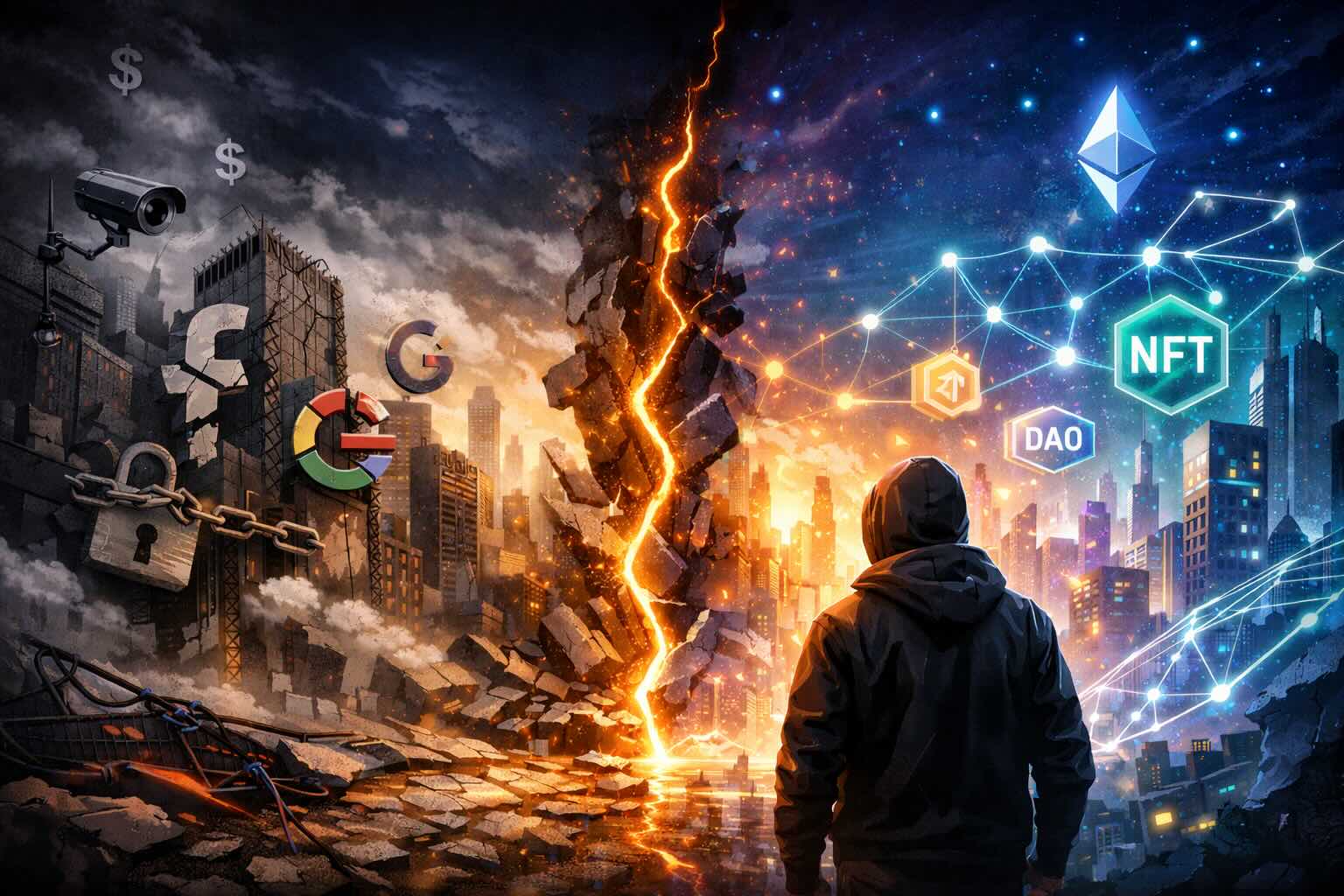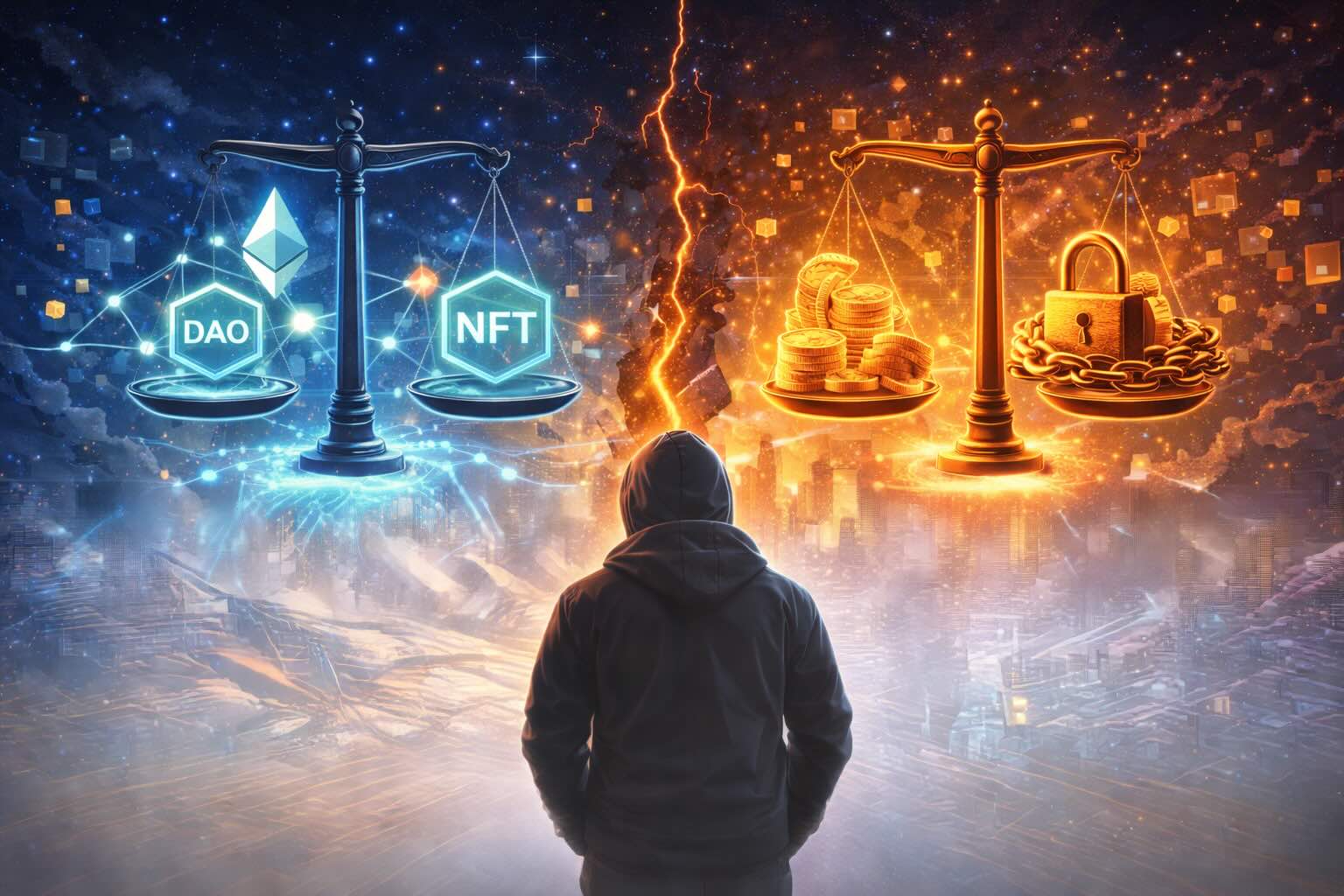
- Web3 is not a polished product yet, it is infrastructure being tested under pressure.
- Its real strength is making ownership, rules, and power more explicit instead of hiding them behind institutions.
- What it still has to earn is trust through better design, clearer education, and systems that hold up under stress.
V — THE VERDICT ⚠︎
What Web3 Gets Right — and What It Still Has to Earn
Every system reveals itself under stress.
What survives is what was real.
The Mistake Everyone Makes
The most common error when judging Web3 is treating it as a product.
Products are evaluated by polish, adoption, convenience, and immediate utility. They succeed when friction disappears and the user forgets how they work. Web3 fails that test constantly.
Interfaces are awkward. Concepts are unfamiliar. Responsibility is exposed rather than abstracted. The learning curve is steep, and the failure modes are unforgiving.
If Web3 were trying to be a product, it would already be a disappointment.
But Web3 is not a product. It is infrastructure under negotiation.
And infrastructure is never judged by comfort in its early stages. It is judged by what it makes possible once pressure arrives.
Why the Failures Matter More Than the Wins
Web3 has failed loudly.
Exchanges collapsed. Protocols were drained. NFTs imploded. Entire narratives evaporated in months. For many observers, this confirmed their suspicion that the entire space was speculative excess dressed up as ideology.
But something important happened during those failures.
The systems did not disappear.
Projects died. Tokens went to zero. But the underlying networks kept producing blocks. Transactions kept settling. Smart contracts kept executing exactly as written. No emergency committee reversed history. No authority rewrote the ledger.
The failure was social and economic — not structural.
𓂀 Kodex Insight:
When everything breaks except the system itself, you are looking at infrastructure.
This is the first real signal.
What Web3 Actually Gets Right
Web3 gets one thing fundamentally right, and it is easy to miss because it is not glamorous:
It separates truth from authority.
In traditional systems, truth is what institutions say it is. Balances are correct because banks say so. Ownership exists because registries maintain it. Agreements hold because courts enforce them.
In Web3 systems, truth is procedural. If the rules execute and the network agrees, the outcome stands. No appeal, no override, no exception for influence.
This is not fair.
It is not kind.
But it is consistent.
Consistency is the raw material of trustless coordination.
It allows strangers to transact, collaborate, and compete without shared identity, shared values, or shared jurisdiction. That capability did not exist on the internet before. Everything else in Web3 flows from that fact.
Why Ownership Had to Become Explicit
Once truth is procedural, ownership can no longer be vague.
In Web2, ownership was intentionally ambiguous. Users “owned” content until they didn’t. Platforms claimed neutrality while exercising total control. Value accumulated invisibly and asymmetrically.
Web3 removes that ambiguity.
Ownership becomes explicit because it has to. Assets are controlled by keys. Governance is tied to tokens. Rights are encoded, not implied. There is no room for interpretation without reintroducing authority.
This is why Web3 feels harsh.
It does not soften power relationships.
It exposes them.
◈ Ownership Check:
Ambiguity protects platforms. Clarity protects users.
This is the second signal.
Why Centralization Keeps Returning
Critics often point out — correctly — that Web3 keeps re-centralizing.
Validators cluster. Capital concentrates. Governance power drifts toward insiders. Interfaces collapse back into custodial platforms.
This is not a betrayal of the vision. It is a reminder of gravity.
Centralization is efficient. It reduces cognitive load. It accelerates coordination. Every system that ignores this will fracture under its own complexity.
What matters is not whether centralization appears, but whether it becomes permanent.
Web3’s advantage is not that it prevents power from accumulating. It is that accumulation remains visible, contestable, and — crucially — reversible if incentives allow it.
⚠︎ Reality:
Web3 does not eliminate power. It limits how quietly it can hide.
That is the third signal.
Regulation Is Not the Opposite of Decentralization
Another false binary dominates discussion: regulation versus freedom.
In practice, the tension is not between decentralization and regulation, but between static rules and adaptive ones.
Web3 systems already regulate behavior. They do it mechanically. Smart contracts enforce constraints more strictly than any legal system ever could. The real question is not whether rules exist, but who can change them and how.
Regulatory pressure will not destroy Web3. It will shape its edges. What survives will be systems that can absorb external constraints without surrendering internal integrity.
This is how infrastructure matures.
Not by rejecting reality, but by surviving contact with it.
Why UX Is the Final Battleground
Everything converges here.
Web3’s long-term success does not hinge on ideology, price, or even innovation. It hinges on whether responsibility can be made legible without being hidden.
Web2 succeeded because it removed friction entirely — and in doing so, removed agency. Web3 risks failing by exposing friction without offering orientation.
The systems that matter will be the ones that teach users what matters, not just what to click. They will make tradeoffs visible without overwhelming. They will preserve sovereignty while reducing error.
This is not a technical problem.
It is a design and education problem.
This is also where structured orientation matters. Platforms like Kodex.Academy exist not to simplify Web3 by hiding its mechanics, but to help users understand them before consequences become irreversible. They reduce error not by removing responsibility, but by preparing people for it — through simulation, sequencing, and context instead of promises.
⧉ Pause:
If users cannot understand consequences, is freedom meaningful?
The Shape of the Likely Future
The future of Web3 will not look like the maximalist vision or the cynical dismissal.
It will be quieter.
Some infrastructure will harden into standards. Some platforms will re-emerge — but weaker, more constrained, and more interoperable. Self-custody will coexist with managed layers. Tokens will stop being narratives and start being tools.
Most importantly, the internet will split more clearly into two layers:
- Systems optimized for convenience
- Systems optimized for sovereignty
Users will move between them intentionally, not accidentally.
That choice did not exist before.
⧖ Forward Look:
The future is not decentralized. It is selectable.
What Web3 Still Has to Earn
Web3 has earned attention.
It has not yet earned trust.
Trust will not come from promises or principles. It will come from systems that hold under pressure, from incentives that reward long-term behavior, and from tools that help people understand what they are actually doing.
The bar is high — and it should be.
Infrastructure that claims neutrality must withstand misuse. Systems that remove intermediaries must justify the burden they place on individuals. Freedom without literacy is not empowerment. It is exposure.
The Final Connection
Seen clearly, Web3 is not a rebellion against the internet that exists. It is an acknowledgment of what that internet became.
Centralization was efficient.
Abstraction was profitable.
And convenience came with a cost we did not measure until it compounded.
Web3 does not promise a better internet.
It offers a different one.
One where ownership is explicit, power is visible, and responsibility cannot be outsourced.
Whether that is progress depends less on the technology — and more on the people willing to engage with it honestly.
Closing
Web3 is not the future of the internet.
It is the internet remembering how power works.
And this time, leaving a record.
This article's whole test is that a system reveals itself only under pressure, and that the record of your choices cannot be quietly rewritten. Put it to work in the simulator: spread fictional capital across the three layers named here (crypto, tokenized stocks, and metals), then hold through a rough stretch and watch which exposure was actually real. The balance is invented, but every entry and exit is logged to you exactly as you made it, with no committee standing by to reverse the ones that went wrong.