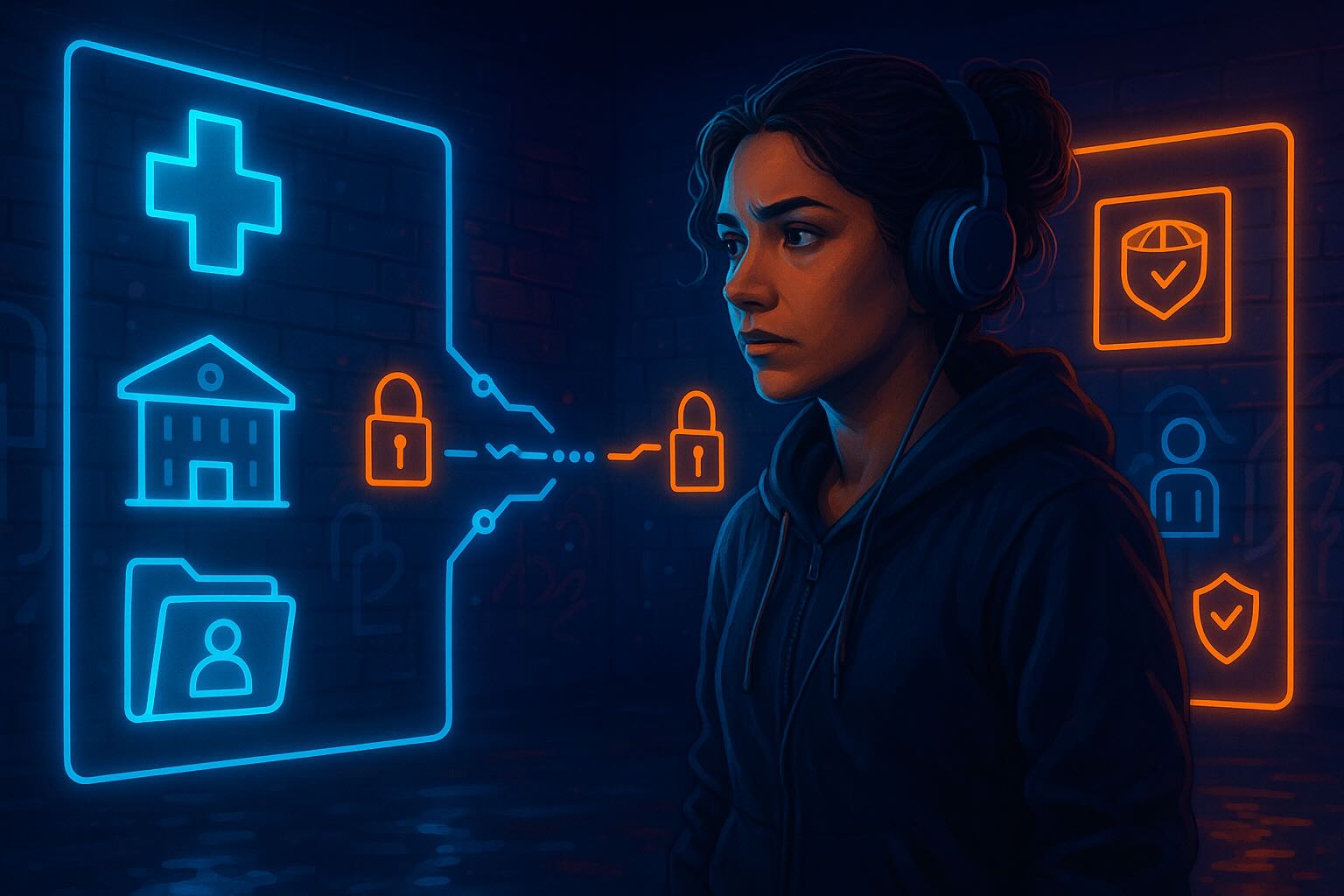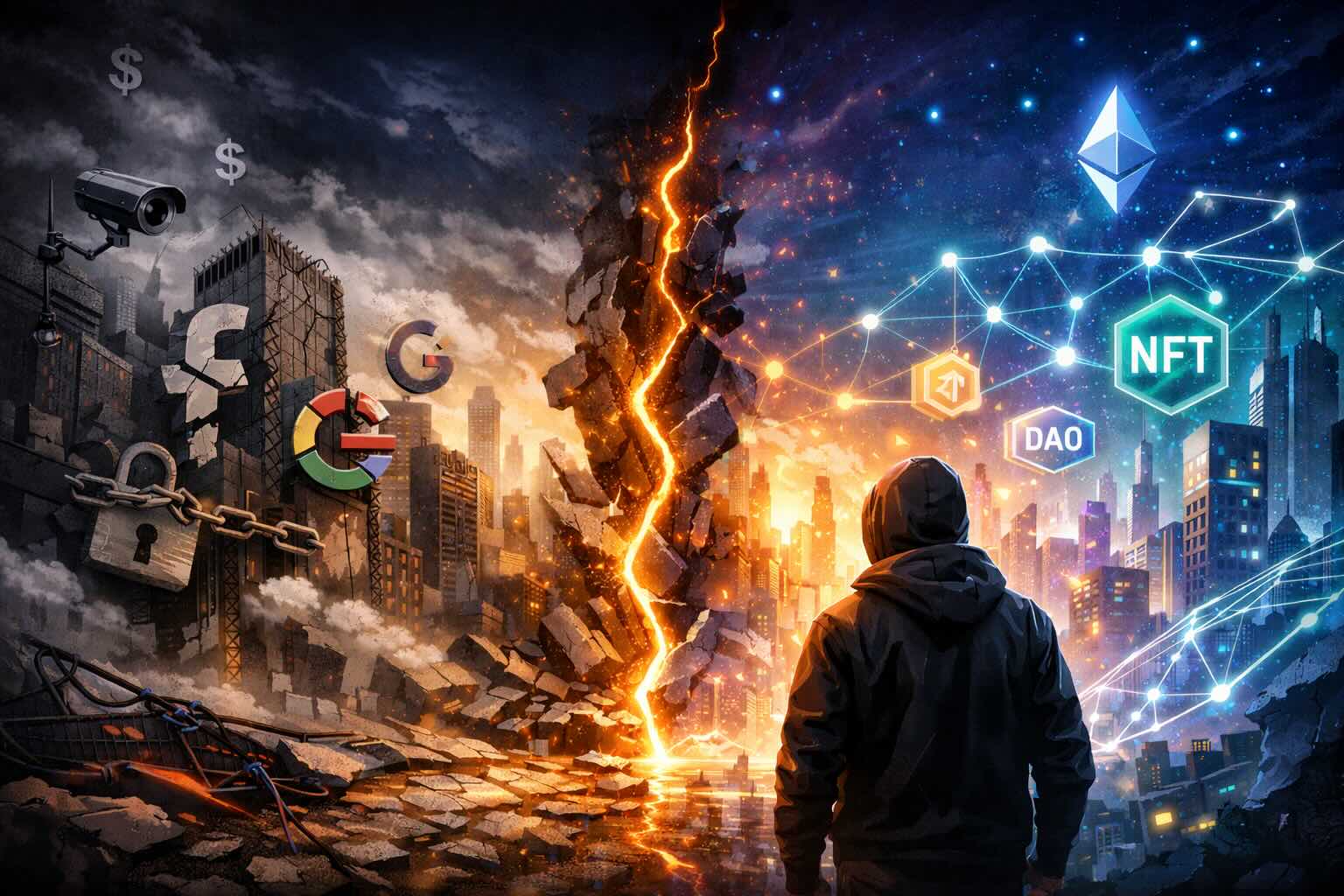
- Public records fail when memory depends on fragile offices, paper archives, or systems that can be altered or lost.
- Blockchain strengthens public memory by anchoring proof in a tamper-resistant system that does not rely on one location or institution.
- The deeper value is permanence: when records survive disaster, error, or neglect, people do not disappear with them.
Blockchain in Everyday Life – Part 2: Public Memory
In Part 1, we saw what happens when products remember — and systems don’t forget.
But trust in commerce is only the surface layer.
Beneath it lies something deeper.
Public memory.
What gets recorded.
What gets kept.
And what disappears when no one’s watching.
Because sometimes, it’s not what gets forged —
It’s what gets forgotten.
And as we return to Lucia’s story,
we’ll see what it means when even the system stops remembering you.
What Remains When the Paper Burns
Lucia never saw the flood coming.
The warnings were vague. The infrastructure was old. When the storm hit, water rushed through the lower city like a broken dam. Her neighborhood library drowned in minutes. So did the community records office.
Afterward, no one could prove who owned what.
Birth certificates. Land titles. Marriage records.
All gone — or corrupted beyond repair.
People didn’t riot. They waited.
For weeks, for months, hoping someone would find a backup, a copy, some kind of ledger that hadn’t been eaten by water or warped by mold.
But the real damage wasn’t just the lost files.
It was the slow realization that identity — something so deeply personal — could be erased by geography, bureaucracy, or decay.
Lucia watched neighbors forced to reapply for papers they already had.
She saw elders denied pensions because their records couldn’t be confirmed.
She stood in line next to her friend whose citizenship was suddenly “under review.”
No criminal hacked their system.
No coup stole their data.
It simply… fell apart.
And in that absence, you realize:
When systems forget you, it doesn’t matter who you are.
Only what’s recorded — and retrievable — survives.
The Fragility of Trust in Public Records
Public memory isn’t sentimental.
It’s structural.
From school diplomas to property deeds, from health history to ID numbers — your entire bureaucratic life depends on a chain of trust that extends across time.
That trust assumes continuity. Stability. Preservation.
But traditional record systems aren’t built to last under pressure.
They're centralized — often managed by a single office or server.
They're opaque — the average citizen can’t verify them independently.
And they’re vulnerable — to corruption, to disaster, to silence.
When a mistake is made, correction is slow.
When a record is altered, the trail is invisible.
And when a file disappears, there’s no way to prove it ever existed.
This isn’t paranoia.
It’s history.
From forged land deeds during regime changes, to quietly altered arrest records, to censored medical histories — the past is full of stories where systems forgot on purpose.
Which raises the deeper question:
What happens when the truth is no longer stored — but curated?
What Blockchain Rebuilds — and Why It Matters
Blockchain doesn’t store feelings.
It stores facts.
And facts — when cryptographically verified, distributed, and immutably written — change everything about how memory works in public systems.
In a blockchain-based public record system:
- Entries are timestamped and unalterable
- Changes require consensus, not a quiet override
- Records are decentralized, reducing single points of failure
- Access is structured — not open for chaos, but open for verification
This doesn’t mean every hospital, school, or court runs on a blockchain.
But it means the backbone of record integrity could.
Imagine a world where:
- Lucia’s flood-affected town had its land registry anchored to a blockchain.
- Each transaction — sale, transfer, dispute — was sealed on-chain, mirrored across nodes.
- Even if the building burned, the records wouldn’t vanish.
Not because someone made a copy.
But because no one needed to.
The system held.
And in that kind of permanence, identity doesn’t depend on geography.
It doesn’t rely on the memory of one official.
It lives inside a distributed structure designed to not forget.
The Role of Layer 2 — Scale Without Sacrifice
You don’t store every file on-chain.
You store proof.
Layer 1 blockchains provide the security — the trust anchor.
But they’re limited in speed and space.
That’s where Layer 2 comes in.
Layer 2 solutions allow for:
- Faster transactions
- Lower costs
- Off-chain data anchoring with on-chain verification
It means you can store massive public datasets — education records, voting logs, ID attestations — in systems optimized for usability, while preserving the integrity of those records on-chain.
Lucia doesn’t need to know how Layer 2 works.
She just needs to know this:
If a school loses her diploma, there’s a way to prove she earned it.
If a medical record is disputed, there’s a cryptographic fingerprint backing its original version.
And if a system claims she doesn’t exist, she can point to a ledger that never forgot her.
Lucia’s Return to the Office
Months after the flood, the records office reopened in a temporary trailer.
Lucia entered with a quiet resolve — this time, carrying a printed QR code linked to a blockchain-based land record initiative run by a neighboring state. She had joined when the pilot launched two years ago. Out of curiosity, mostly.
Now, it wasn’t curiosity.
It was the only record that had survived.
The clerk looked skeptical at first — until the verification system pinged green.
No dispute. No duplicate.
Just proof — anchored, time-stamped, signed by validators.
Lucia stepped outside and watched another woman struggle with her documents — wet pages, blurred ink, years gone in an instant.
It didn’t feel like winning.
It felt like witnessing the future arrive — unevenly, but undeniably.
Memory, Anchored
Records are more than files.
They are the infrastructure of self.
And when society forgets you — whether through disaster, error, or neglect — the cost is more than inconvenience.
It’s erasure.
That’s what makes blockchain more than a buzzword in public systems.
It’s not about decentralization as ideology.
It’s about resilience as structure.
Lucia didn’t gain privilege.
She gained permanence.
Not because someone granted it —
But because the system she chose remembered when others didn’t.
That’s what public memory looks like
— when the system is designed not to forget.
The story doesn't end here → Continue to Part 3
Open a paper account and place a few trades across crypto, tokenized stocks, or metals, then close the tab and let a week pass. The money was never real, but the record of what you did is: come back and open your trade history, where each entry sits timestamped and unedited, exactly as you left it rather than as you would prefer to remember it. That is the property this article handed Lucia's land registry, now turned on your own decisions. You cannot quietly rewrite the log, so it becomes the one account of events that outlasts your memory.