Lesson 2 - Pump-and-Dump & Coordinated Hype
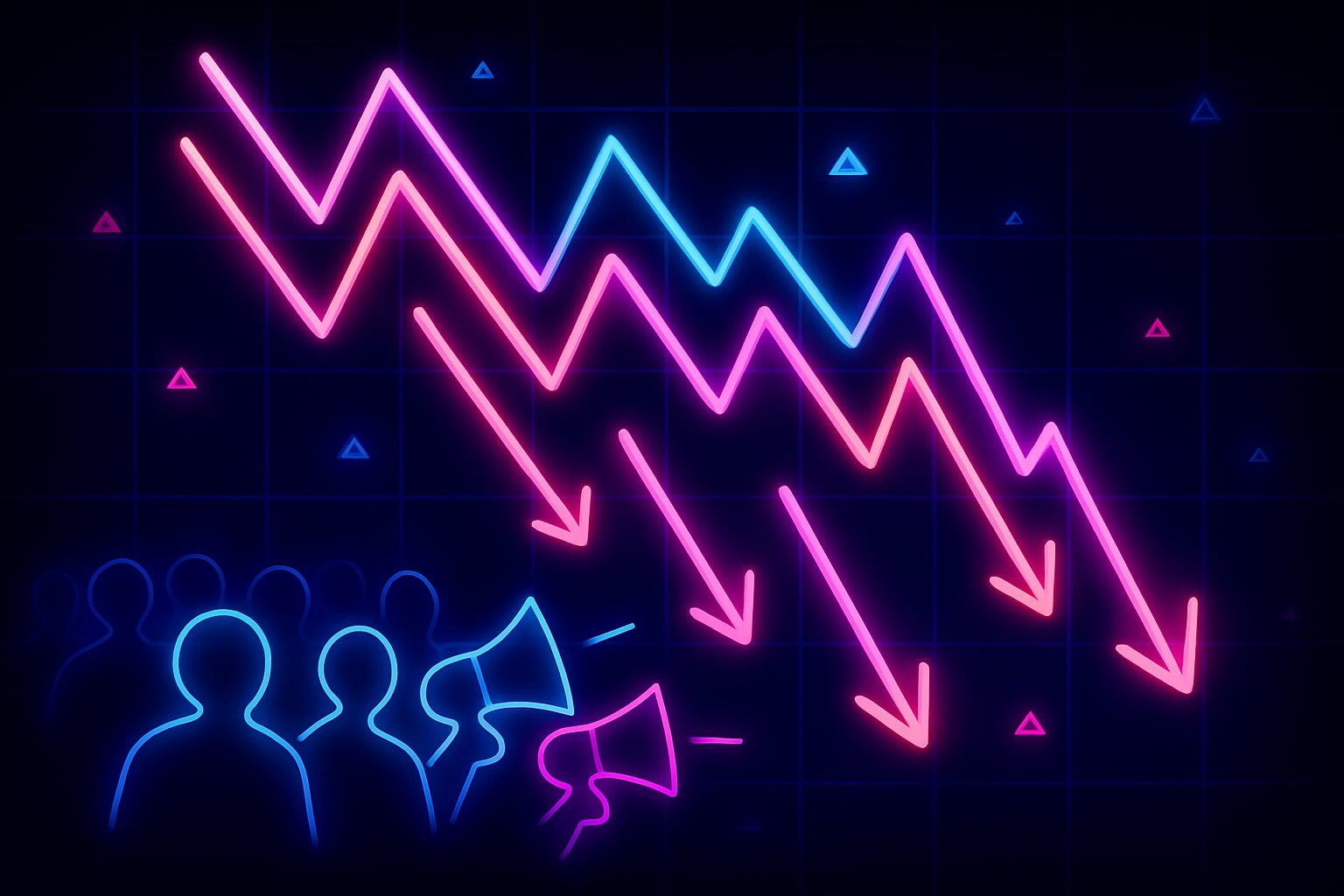
How it works: Prices move where buyers and sellers meet. In small or new markets there isn’t much depth (liquidity), so even modest market orders can shove price around. A pump group quietly accumulates first. Then they manufacture attention—countdowns, influencer mentions, “insider lists”—to pull in new buyers. Because depth is thin, each buy pushes price up quickly; that rising line becomes the “proof” others need. When enough late buyers arrive, early holders sell into that demand (called distribution). With no real usage or news behind the move, volume fades and price drops back—often below the start. Their profit comes from selling earlier than the crowd, not from the project improving.
Spot it
- Sudden coordinated hype in groups or feeds around a low-cap token.
- Screenshots of insider lists, countdowns, or synchronized buys.
- Thin liquidity—small trades move price far.
What to do
- Check liquidity depth and concentration of holders before acting.
- If already caught in the move, plan your exit while volume is still high.
How It Plays Out
You step into a crowded channel, the kind that hums with urgency. A timer ticks down; memes fly. Everyone insists the token on deck is the next rocket. The order book, though, looks fragile—a narrow bridge with too much weight waiting to cross.
Here’s the rhythm: a few wallets loaded up early, when nobody watched. Now the signalers are at work. Threads, live calls, and screenshots flood your screen. The price lifts with every small buy, not because demand is deep, but because supply is shallow. On the chart, it feels like conviction. In truth, it’s mechanics.
Why people fall for it is simple: the mix of fear and promise. You see proof in green candles, hear others celebrating in real time, and wonder if you’re about to miss the only train leaving tonight. The stories wrap you faster than the math.
But math has its own story: in a pool with $80k of depth, a $5k order can jolt the price upward. Imagine a hundred traders trying to be early—it looks like a launch. When the early holders begin to sell, though, the same shallow depth works in reverse. One wave out, and the line collapses.
The safe move is boring: check liquidity and holder distribution before you act. If you’re already inside, decide on your exit before the music stops. And if you arrive late—when candles look too vertical and voices too loud—sometimes the best trade is not stepping in at all.
Pocket anchors: Shallow pools amplify drama. Urgency is a lure. If someone needs your hurry, they’re already ahead of you.